MVRSunset_sized
muskiesinc small
fgw_njlogo_title02

New Jersey Muskies Inc. Chapter 22

new_jersey logo small
muskellunge Button Gallery
muskellunge Button MEssage Board03
MARC BLUE02
angus link

Where do New Jersey Muskies Come from?

ANSWER >They come from the hard work of many individuals who perform countless hours of labor .


fgw_njlogo_title

Trap nets are set  in strategic locations through out the lake in the early spring to collect Muskellunge in the pre spawn time period .The nets are checked daily for brood stock .

webtrapnet
trapnetmuskieweb

This is the view our friends at fish & Game hope to see when they check there trap nets.

musky_logo[1]
bk_logo

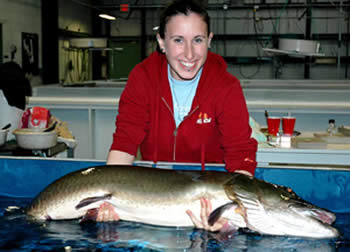
Upon arrival at the Hackettstown hatchery the fish are separated by gender (male and female) and ripeness (degree of egg development). Also during their short stay at the hatchery information such as length, weight and any fish markings, such as fin clips or tags, are recorded.


brodmsk06
muskieinject07sm

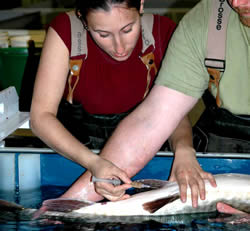
Rutgers intern Kristina Kravit injects a female muskie with spawning hormone.


muskiespawnweb

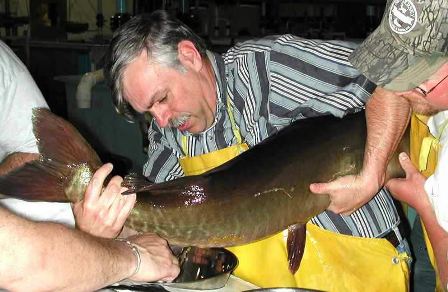
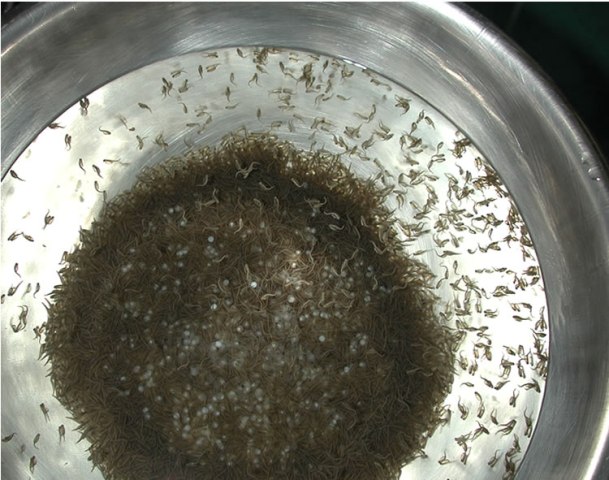
At the hatchery the fish will be anesthetized (put to sleep) by adding the drug tricaine to a tub of water and placing the fish in the tub. The fish are then manually stripped of their eggs and milt (fluid containing sperm) which are mixed into a bowl. This allows fertilization to occur. The fertilized eggs are then water-hardened, counted and measured into hatching jars. Eggs will hatch in 10-15 days.


muskiefry

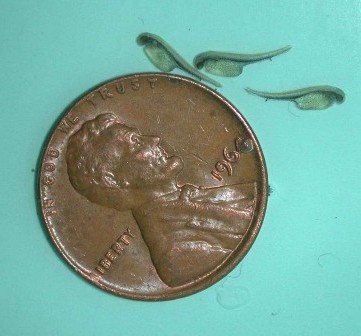
It’s pretty amazing how our friends at the Hackettstown Hatchery grow these fry into 7 to 12 inch muskies to stock in our many waters by mid fall.

fry_with_penny_sizedweb02

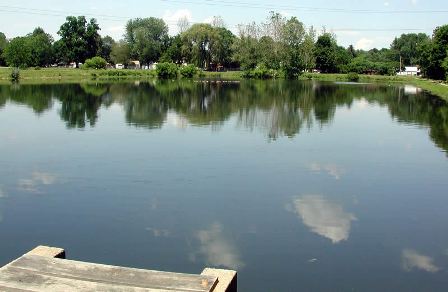
During the spring season Hackettstown Hatchery workers are busy filling many of the extensive rearing ponds with spring and brook water. As these ponds are filling organic fertilizer is pumped or thrown into the ponds to initiate the growth of phytoplankton (microscopic plants) to create a food source for the incoming fry. Fry are introduced to the fertilized ponds between one and two weeks after hatching.

Plankton blooms and dissolved oxygen readings are monitored on a daily basis. Pond fertilization using pulverized alfalfa is maintained to produce a steady food supply for the growing fish. The growing food supply is made up of zooplankton (microscopic animals).


pond
tigermuskie_fing250
feeding inside

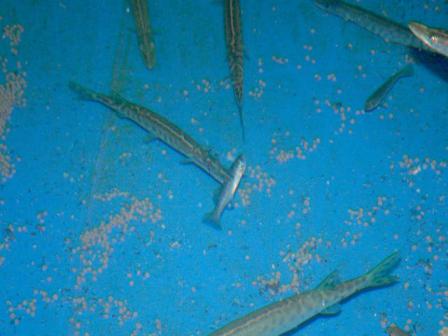
When the fingerlings have reached the size the Biologist have requested (some species, such as muskellunge and Tiger Muskellunge, will require additional feed such as fathead minnows) this is one of the ways Muskies inc. supports the division. We use our funds from our many fundraisers to purchase fatheads minnows to help grow the hatchery fish larger ,stronger and the results increases the odds of survival rates of the stocked fingerlings


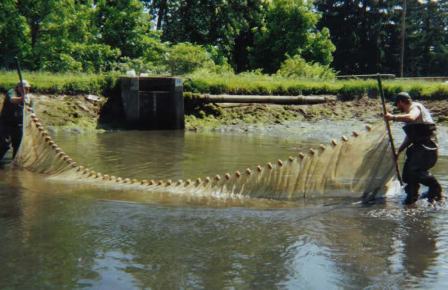
Once a clear netting area has been established seining (netting) will commence. Depending on fish size and pond width, seines of various sizes (1/8, 1/4 and 1/2-inch mesh) and lengths (25-80 feet) will be chosen. The fish are netted and loaded into a tank truck. The fish are transported to the intensive culture building where they are counted, measured and weighed. They are then placed in holding raceways until stocking.


seinepike
stocking truck

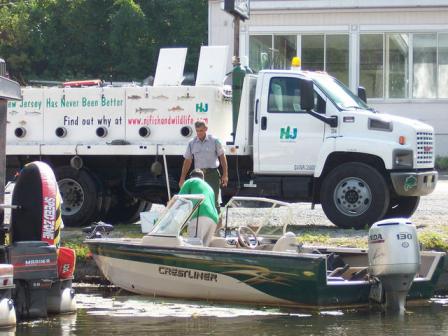
The stockings take place in mid fall in various lake and rivers across the state.

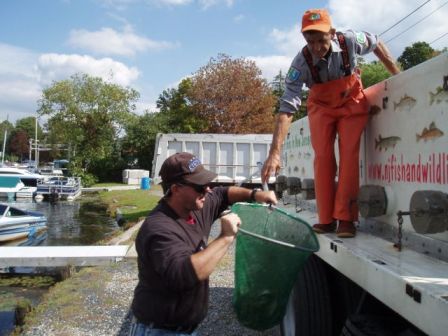
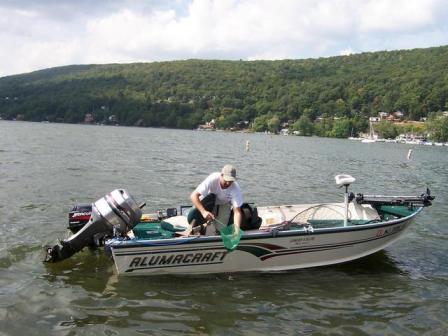
New Jersey Muskies Inc. works with the division during it’s stockings in the fall. Our members volunteer there boats and time to help with the float stocking of thousands of muskies.

jeffgetting muskies
kj1stocking1_sized02

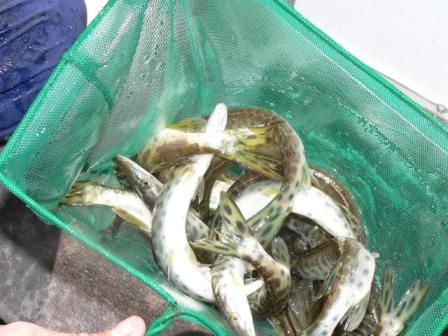
The Muskies are stocked in weed beds and other types of cover to give them the best odds of survival.

A net full of fingerlings on there way to there new home.

muskies in net
jaystock_sized

As you can see there allot of worked involved in our muskie fishery .

New Jersey Muskies Inc. would like to thank the Division for all of there hard work, especially the people at the Hackettstown hatchery .  We appreciate your dedication and the way you all go above and beyond the call of Duty. 


Please Practice Catch and Release

We encourage all Anglers to practice catch and release. Muskies are a valuable resource and we are most fortunate here in New Jersey to have such a fine stocking program. The reason for C&R is to sustain our fishery and grow trophy Muskellunge. Did you know it takes a female Muskie on average 3 years to grow 30 inches ? Most trophies are 10 plus years old. Contrary to belief there’s not a endless supply of fish , so consider taking a quick picture and a quick release.

For those of you looking for a wall hanger ,did you know it’ll cost you anywhere from $500 to $700 to have your trophy mounted. Unfortunately  traditional fish mounts don’t last too long before the heads start shrinking and you get cracks through out the mount .I would highly recommend a reproduction ,they’ll last you a lifetime and recycle a fish for another day .

If you are interested in learning how to catch muskies ,I would suggest signing up for muskie school.


muskie08